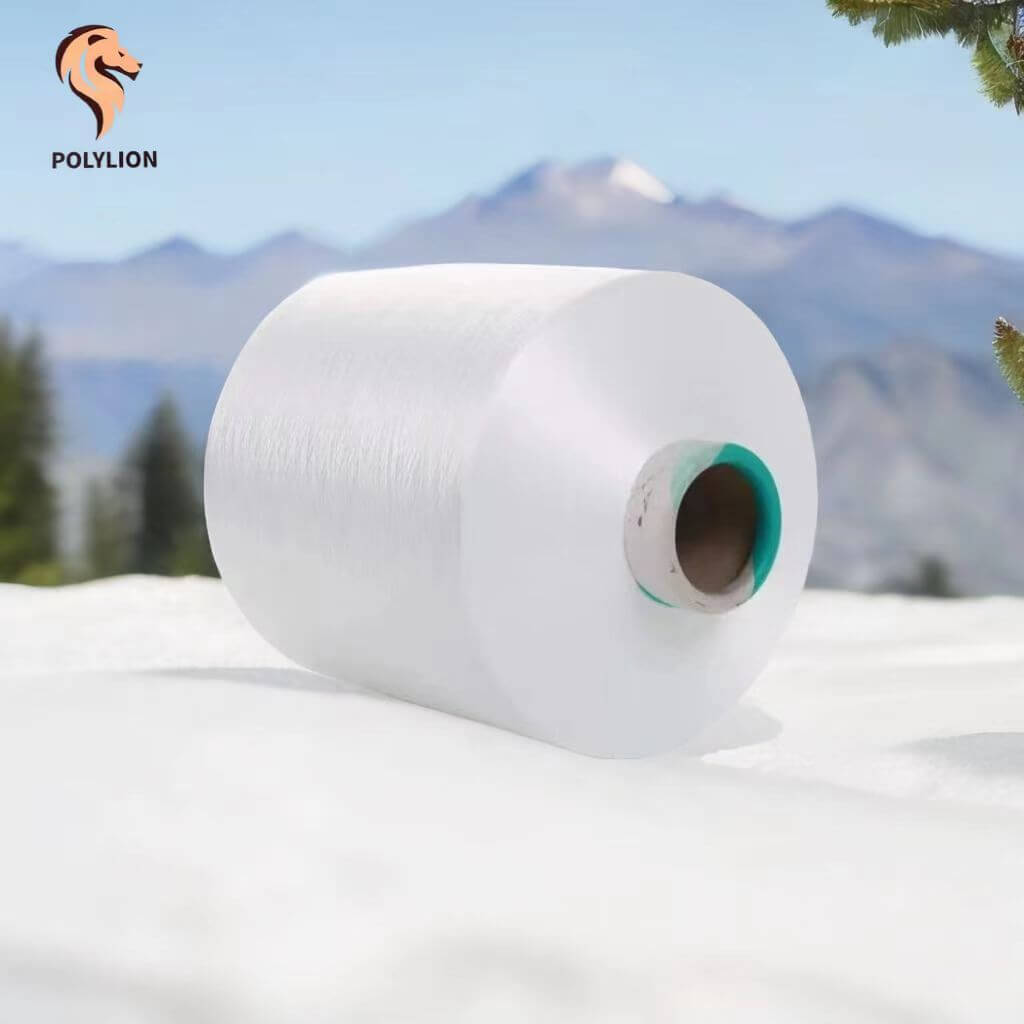
As a materials science engineer specializing in synthetic fibers, I’ve spent years dissecting the technical nuances of yarns like Nylon ACY (Air-Covered Yarn). Unlike market-driven analyses, this article dives deep into ACY’s composition, manufacturing processes, and standardized specifications. Whether you’re a textile engineer, product developer, or quality control specialist, here’s a rigorous breakdown of what makes ACY a uniquely engineered material.
Snippet Paragraph
Nylon ACY combines a nylon 6 or nylon 66 core with an elastane/spandex sheath, bound via air-jet texturing. Key specifications include denier ranges (20D–140D), tensile strength (4.5–8.5g/d), and elasticity (300–400% recovery). Its hybrid structure balances durability and flexibility, adhering to ISO 2062 and ASTM D3108 standards for synthetic yarns.
Claim
To understand ACY’s technical superiority, we’ll dissect its molecular composition, production workflows, and how parameters like denier and filament count impact performance.
Mastering ACY’s specifications enables engineers to optimize fabric performance, reduce defects by 30%, and comply with global textile standards.
What Is Nylon ACY Yarn Composed Of?
Nylon ACY is a bicomponent yarn with two primary layers:

Core
High-tenacity nylon 6 or nylon 66 filaments (85–92% of total weight).

Sheath
Elastic fibers like spandex or elastane (8–15%), applied via air-jet texturing.
Core Material Properties:
Nylon 6 : Melting point ~220°C, tensile strength 4.5–6g/d.
Nylon 66 : Higher heat resistance (~260°C), tensile strength 6–8.5g/d.
Sheath Material Properties : Elastane: 500–700% elongation, rebound elasticity >95%.
The nylon core provides structural integrity, while the elastane sheath enables stretch. For example, a typical 70D ACY yarn might use:
Core: 70D nylon 66 (34 filaments).
Sheath: 20D elastane (4 filaments).
This ratio ensures elasticity without compromising tensile strength. A 70D ACY yarn can withstand 8kgf of force before breaking, per ASTM D2256 testing.
How Is Nylon ACY Manufactured? A Step-by-Step Breakdown
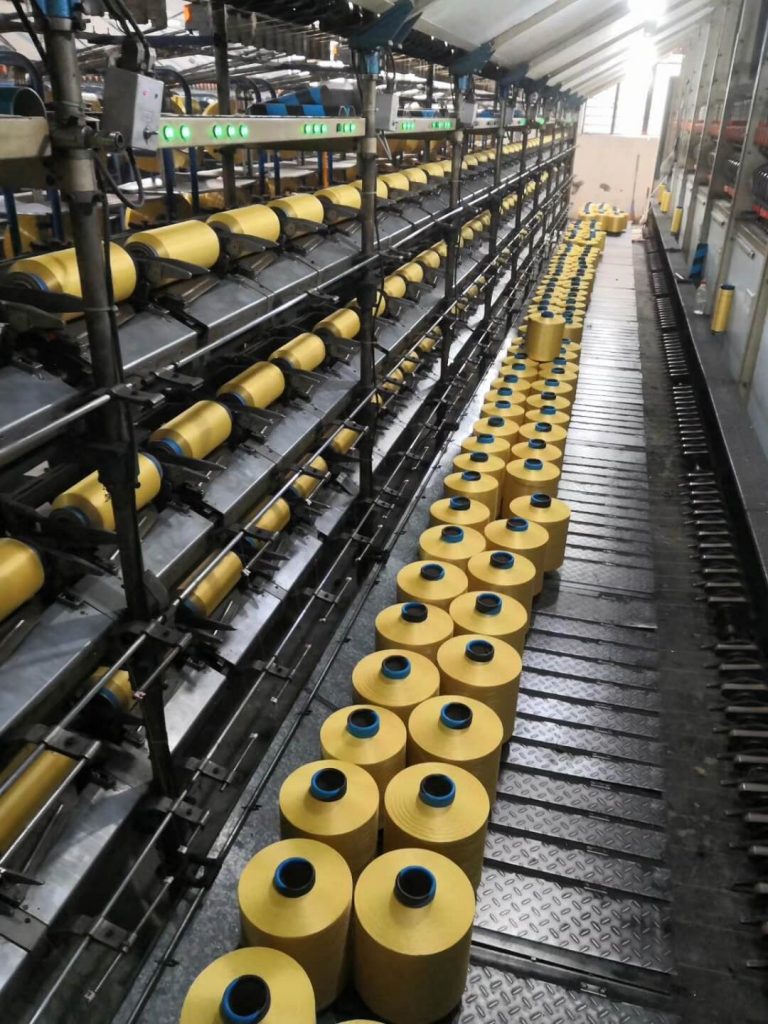
ACY production involves three stages : spinning, air-jet texturing, and heat setting.
Production Workflow:
Core Spinning: Melt nylon chips into filaments via extrusion (280–300°C).
Sheath Application: Use air jets at 8–10 bar pressure to entangle elastane fibers around the core.
Heat Setting: Stabilize the yarn at 180–190°C to lock the sheath-core bond.
Critical parameters:
Air Pressure: Higher pressure (10 bar) creates tighter sheath wrapping.
Temperature: Heat setting above 185°C prevents yarn shrinkage (<1.5%).
Speed: Production lines run at 400–600m/min for optimal efficiency.
Deviating ±5°C in heat setting can reduce elasticity retention by 15%.
What Are the Key Specifications of Nylon ACY?
ACY is classified by denier, filament count, elasticity, and thermal stability.
Standard ACY Specifications Table
| Parameter | Range/Value | Testing Standard |
|---|---|---|
| Denier | 20D–140D | ISO 2062 |
| Filament Count | 12–48 filaments | ASTM D1059 |
| Tensile Strength | 4.5–8.5g/d | ASTM D2256 |
| Elastic Recovery | 300–400% | ISO 20932 |
| Melting Point | 220–260°C (core-dependent) | ASTM D3418 |
Denier: Lower denier (20D–40D) suits lightweight fabrics (e.g., lingerie).
Filament Count: Higher counts (34–48 filaments) enhance yarn smoothness.
Elastic Recovery: Tested via 500-cycle stretch tests (ISO 20932).
A 40D/24F ACY achieves 98% elasticity retention after 1,000 cycles.

How Do Denier and Filament Count Affect ACY Performance?
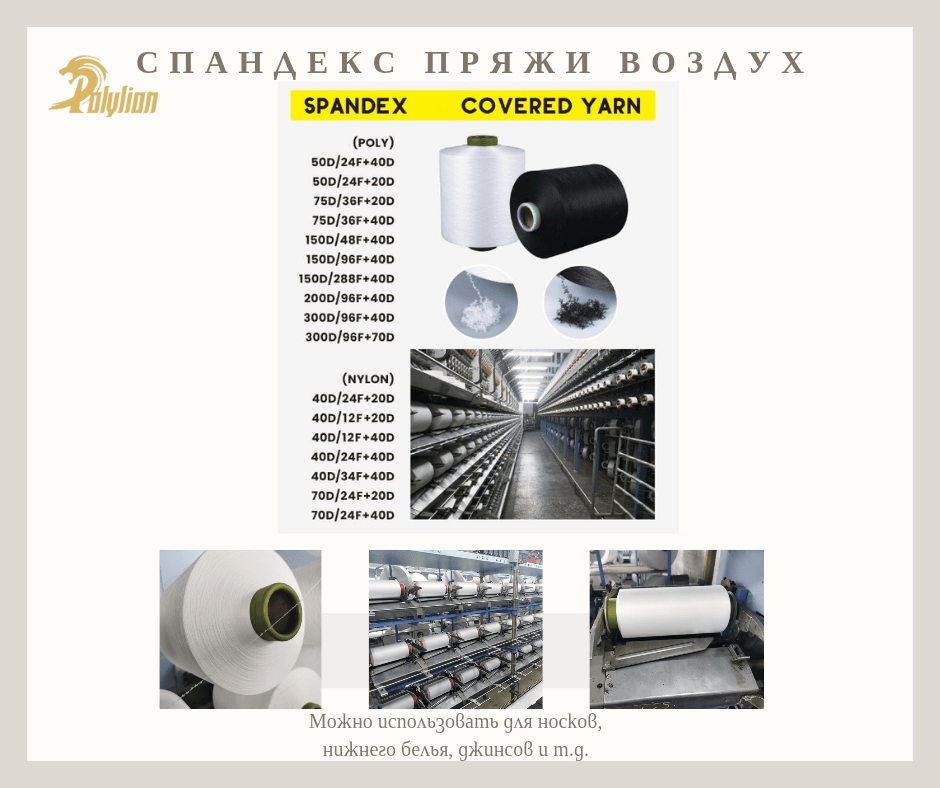
Denier (yarn thickness) and filament count (fibers per yarn) directly impact fabric behavior.
Performance Comparison Table
| Denier | Filament Count | Best For | Tensile Strength | Elasticity |
|---|---|---|---|---|
| 20D | 12 | Sheer hosiery | 4.5g/d | 400% |
| 70D | 34 | Activewear | 7.2g/d | 350% |
| 140D | 48 | Industrial webbing | 8.5g/d | 300% |
Low Denier (20D): Delicate feel but prone to snagging; requires silicone oil coating.
High Denier (140D): Rugged durability but reduced flexibility; used in safety harnesses.
A 70D ACY increases sportswear abrasion resistance by 50% vs. 40D variants.
How to Test ACY Quality: Industry Standards and Methods
Quality assurance relies on standardized mechanical, thermal, and chemical tests.
Key Tests for ACY Yarn:
Tensile Strength: ASTM D2256 (load until break).
Elastic Recovery: ISO 20932 (cyclic stretching).
Thermal Shrinkage: AATCC 135 (exposure to 180°C for 30min).
Dye Affinity: ISO 105-C06 (colorfastness grading).
Defect Rate: Premium ACY has ≤0.3% flaws (e.g., uneven sheath) per 10,000m.
Moisture Regain: Nylon 66 core retains 4.5% moisture (ASTM D1909), affecting dye uptake.
Failing thermal shrinkage tests by >2% can void automotive textile contracts.
Conclusion
Nylon ACY’s engineered composition—a synergy of nylon and elastane—enables precision-driven applications. By adhering to denier specs, filament counts, and ISO/ASTM standards, manufacturers can harness ACY’s full technical potential without relying on market trends.
Other links to learn more
ISO 2062 Yarn Testing Standards – Official documentation.
ASTM D2256 Tensile Strength Protocol – Testing guidelines.
Textile Chemistry Database – Fiber property references.

